Bridge building team building is a team activity in which each group puts up a bridge with wood and rope, and at the end someone from the team walks across it. It works because nobody builds bridges at work: there are no experts, so everyone has to plan together before touching a single slat.
It takes place outdoors or in a large room. We only work with companies.
In a nutshell
Each team builds its bridge with slats or logs and rope.
The materials can be handed over in full or earned through short challenges of wit and skill.
At the end, one person from each team crosses their bridge, held steady by their teammates.
A jury scores sturdiness, originality and how the work was shared out.
What bridge building for companies looks like
Briefing. The teams are formed and we explain what has to be built, with what materials and how much time there is.
Getting the materials. If there is time, teams earn slats and rope by completing short logic, skill and teamwork challenges. The more they pass, the better the bridge they can build. If time is tight, the materials are handed out at the start.
Planning. Before tying anything, the team agrees on the design and shares out roles. Teams that start building without a plan usually have to take it apart.
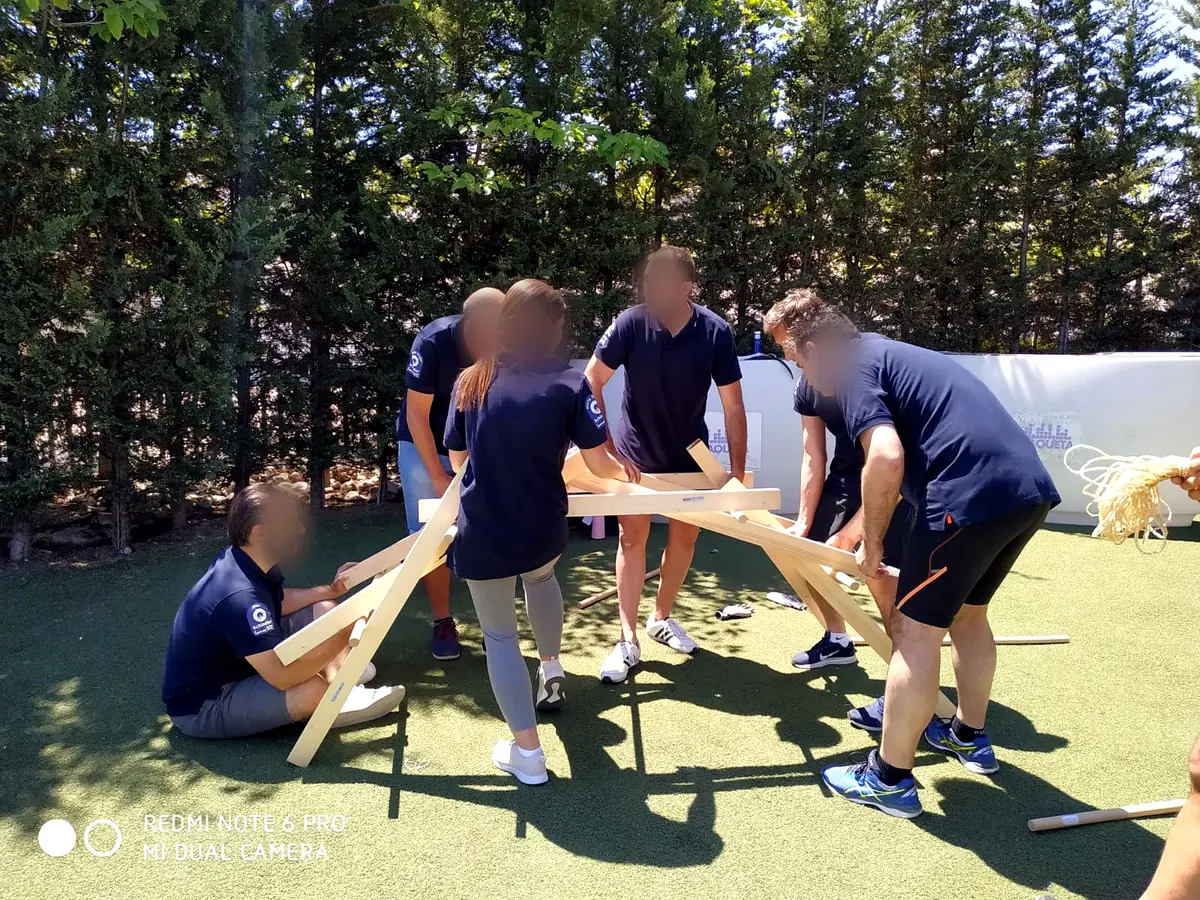
Building. Limited time, wood and rope. Some hold, some tie, and someone watches from outside in case it starts to lean.
Crossing. One person from each team walks over their bridge, supported by their teammates.
Jury and awards. The bridges are judged and the winning team receives a certificate.
Putting up the structure is when you find out whether the plan was any good.
Two types of bridge
Bridge
What it is made of
What it asks of the team
Da Vinci bridge
Slats that lock into each other, secured with rope
Understanding the design and assembling in order
Log bridge
Logs, planks and rope
Shared effort, knots and coordination
The Da Vinci bridge
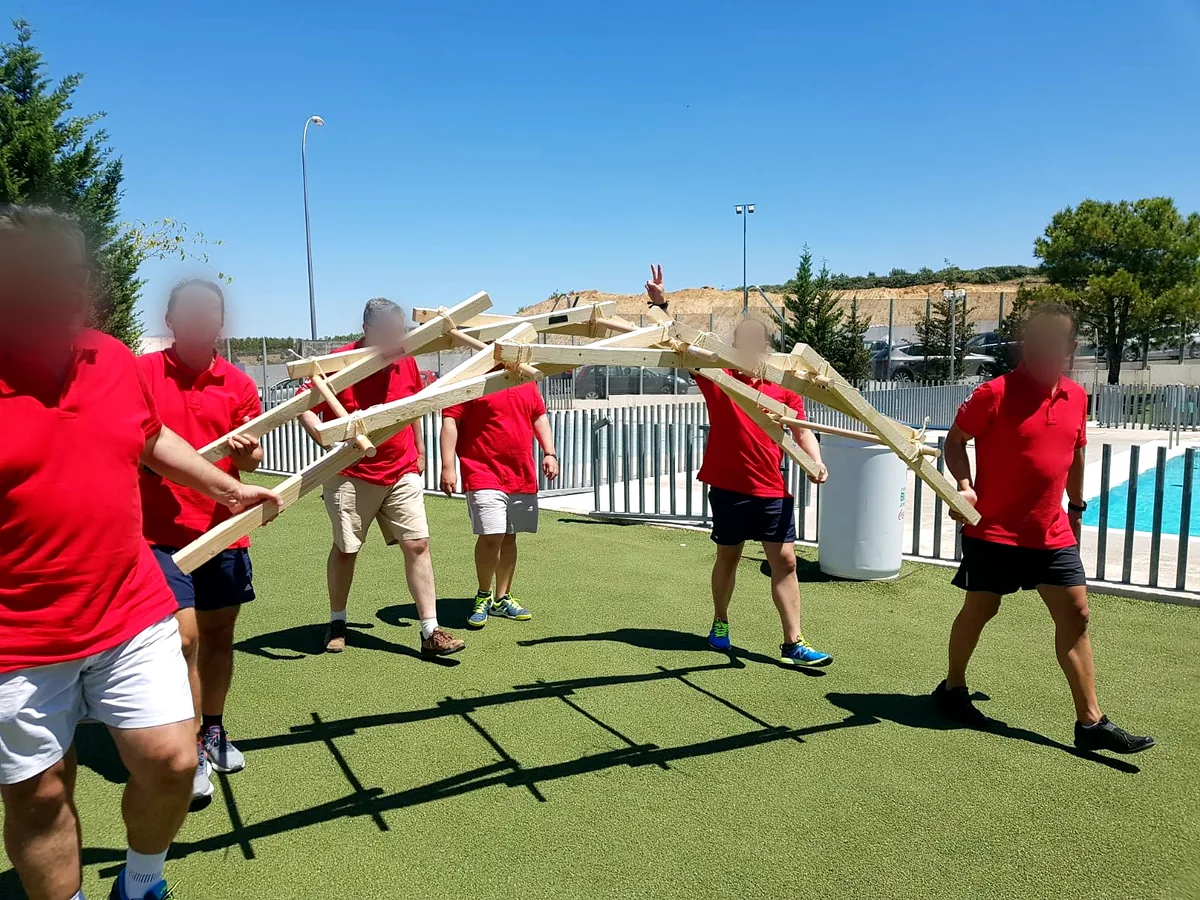
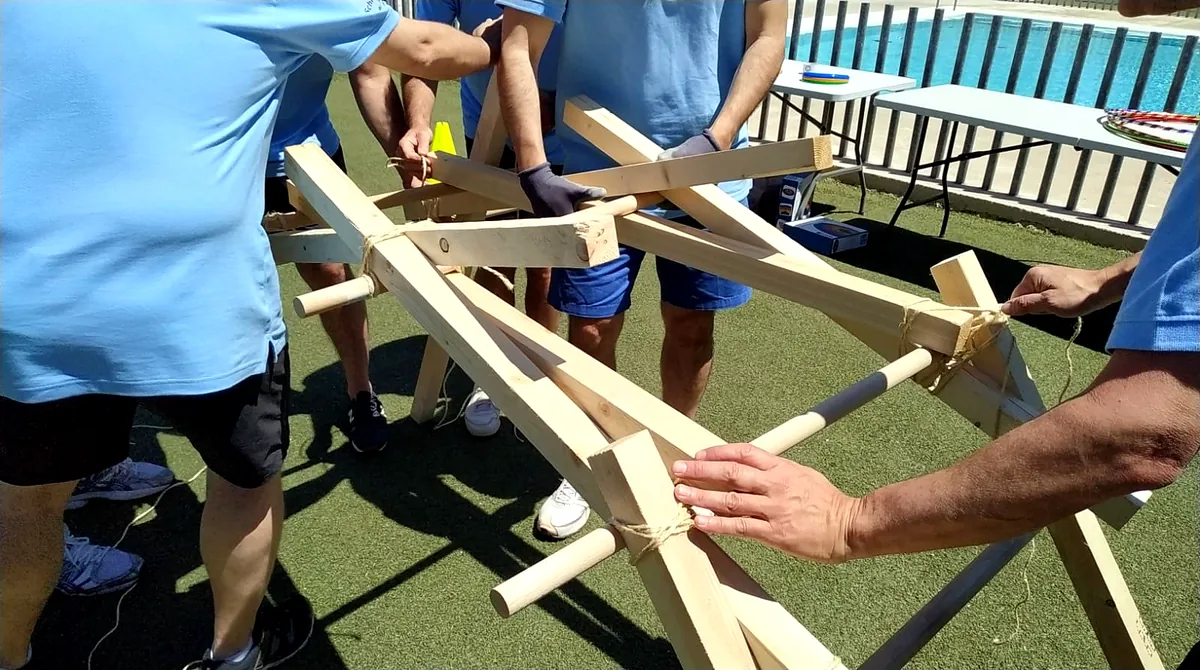
It is an arched bridge made of slats that rest on one another. It has no nails: it stays up because of the way the pieces are placed. It looks impossible until someone on the team understands the drawing and explains it to the others.
In the Da Vinci bridge, each slat holds up the next one.
The log and rope bridge
It is bigger and more physical. The supports go up, the plank walkway is laid across and everything is tied with rope. Several people need to hold things in place at the same time while others tie the knots.
The finale: crossing the bridge
When time is up, one person from each team crosses their bridge. It is no higher than one metre and they cross leaning on their teammates, so there is no risk, but the moment still feels big: it is when you see whether what you built holds up.
The jury looks at three things: that the bridge is sturdy, that it has an idea of its own and that the team made good use of the materials.
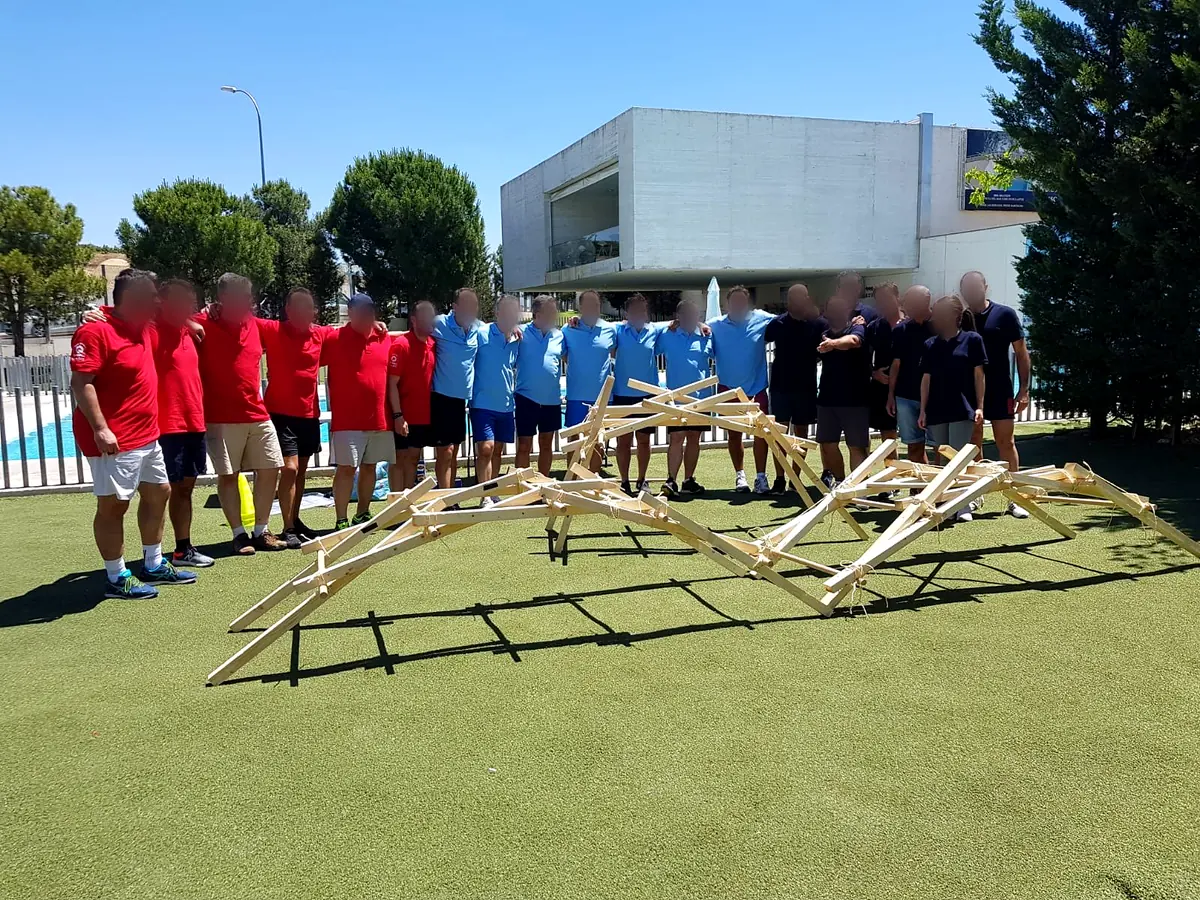
At the end, all the bridges in a row, with each team standing behind its own.
When it is over, we send you a PDF report if you would like one. It covers the activity and how it went, how the teams finished and who won, the conclusions and the photos of the day.
The activity and how it went
The teams and the winners
The conclusions
The photos
Frequently asked questions about bridge building team building
How long does it last and how many people is it for?
Between 1 and 3 hours, depending on whether the materials are earned through challenges, for groups of 10 to 550 people split into teams.
Do you need to be good at DIY?
No. The design is explained at the start and the materials are wood and rope. The hard part is reaching an agreement.
Is crossing the bridge dangerous?
No. It is no higher than one metre and whoever crosses is supported by their teammates.
Can it be done indoors?
Yes, in a large room, with the Da Vinci bridge, which takes up less space. Outdoors it looks better.
What is the Da Vinci bridge?
An arched bridge made of slats that hold each other in place because of the way they are positioned.
Do you organise it for private individuals?
No. We only work with companies and corporate events.