
What makes it different
The innovation
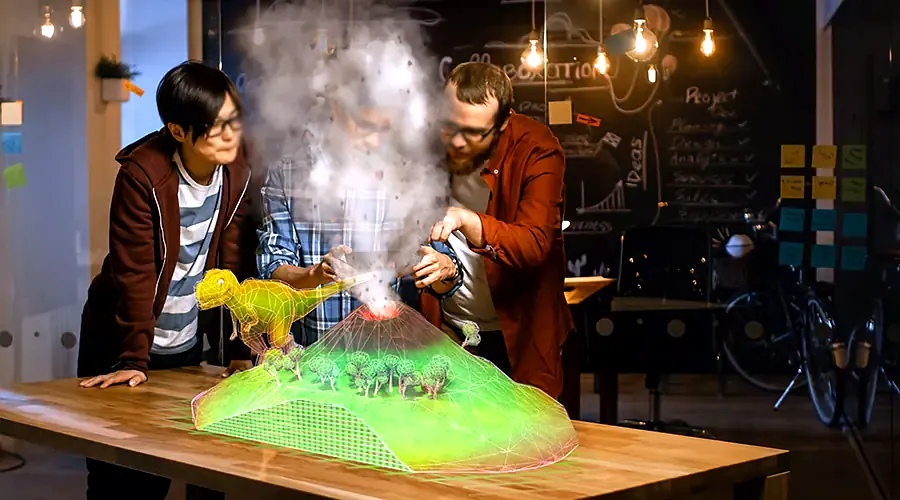
During prototyping, teams can use virtual and augmented reality, connected devices or software development, depending on what the challenge needs.
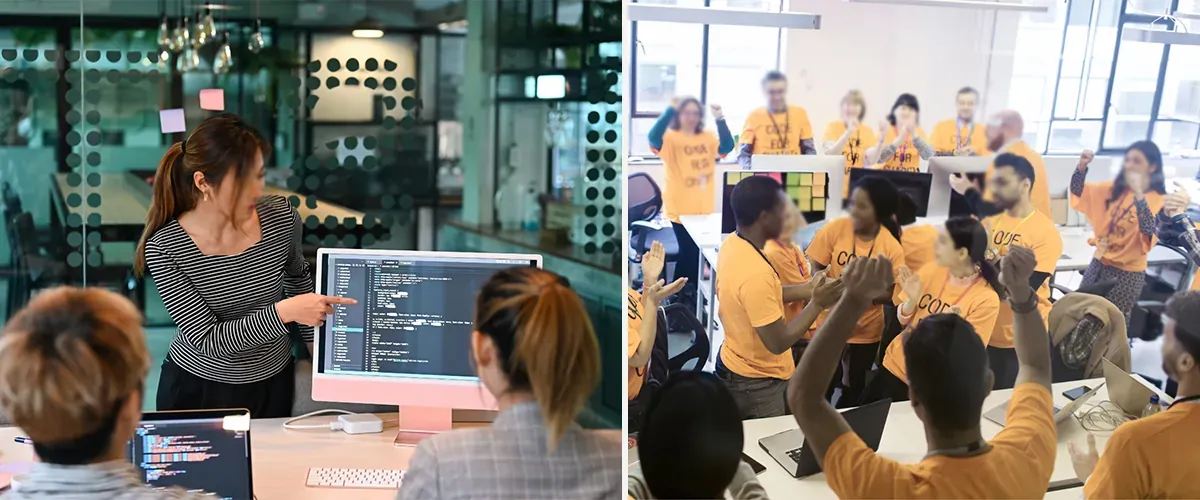
We run a corporate hackathon in Madrid in a short format: in a single morning or afternoon, teams made up of people from different departments work on a real challenge from your company and end up presenting a proposal they can show.
No coding skills needed. Hackathons were born in the software world, but the format works just as well for marketing, operations, HR or customer service.
Classic hackathons last one or two full days. Ours is designed to fit into a convention or a working day, so the ambition changes: you don't walk out with a finished product, but with several concrete, comparable proposals on the same problem, and with teams that don't usually work together having done just that.
The challenge. We define it with you before the event. The more specific, the better: “how do we halve the onboarding time for a new client” gives far more to work with than “how do we innovate more”.
The teams. We mix departments and levels on purpose, because fresh ideas come from putting the people who know the problem together with people seeing it for the first time.
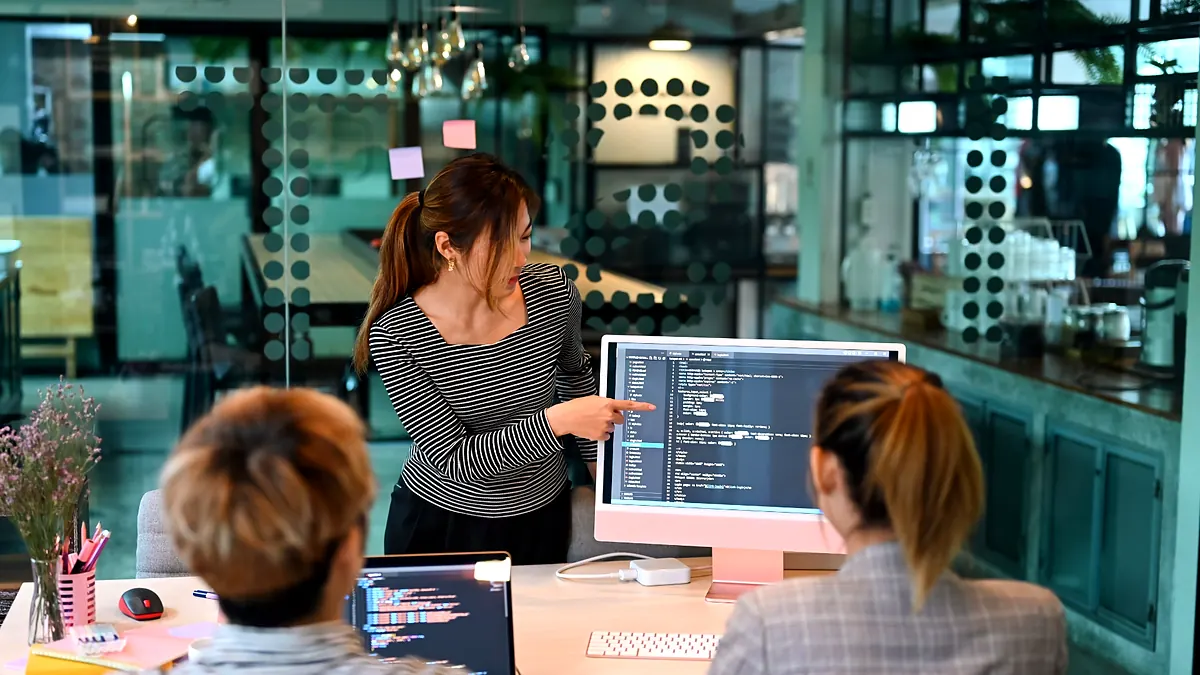
Ideate and prototype. Teams come up with ideas, pick one and turn it into something you can see: a diagram, a paper mock-up, a script. The key is to make it tangible early so flaws show up as soon as possible.
Presentation. Each team pitches its proposal in a few minutes to the rest of the group and to whoever you choose to judge it.
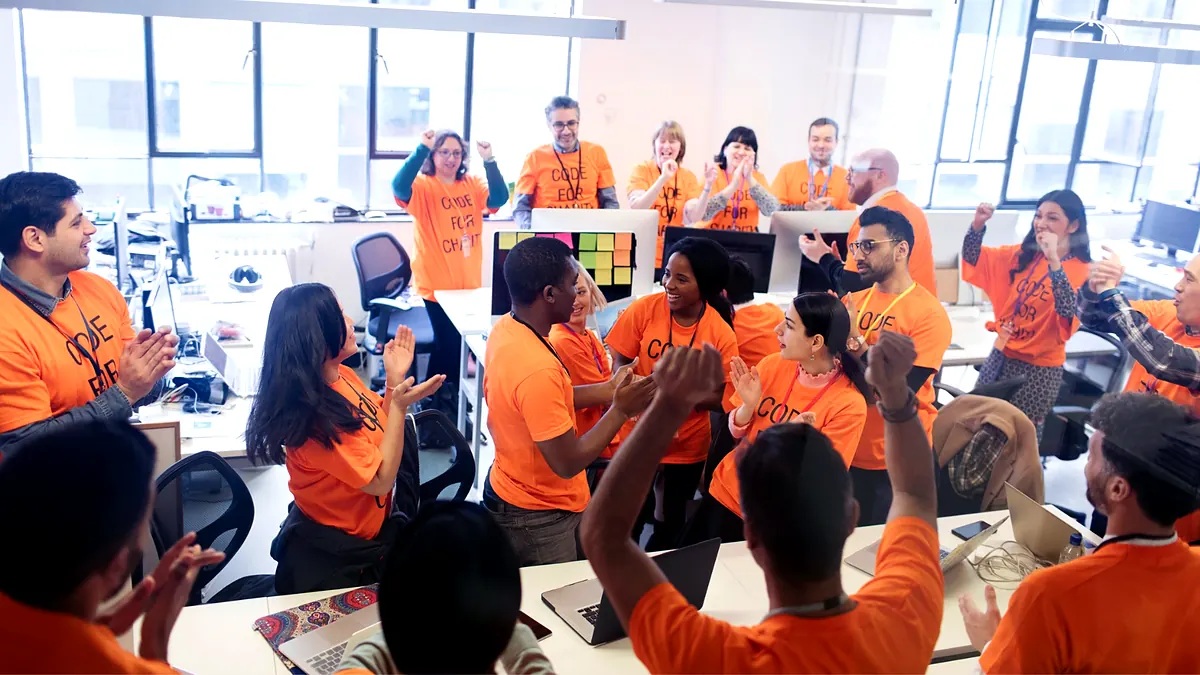
The proposals, which are written up so someone can pick them up later. And a fairly accurate picture of how people work when you take them out of their usual team: who organises, who gets things unstuck and who can explain an idea in two minutes.
A real challenge, someone from the company who knows the problem and can answer questions during the session, and a room where teams can work at separate tables. If you want the best ideas to go somewhere, decide beforehand who will take care of them.
In 2025 we organised a datathon for an electricity company, the version of the hackathon focused on data analysis. As the company couldn't share its real data, we generated and prepared synthetic data, the presentations and the full management of the day.
Each team needs its own table, power sockets and a good connection, because people work on laptops for hours. An office meeting room works if all the teams fit; for large groups, a hotel function room or an event space with a screen for the final presentations.
It helps to have a separate area for coffee and lunch, so teams can take a break without clearing their table.
Depending on the challenge, the session draws on one of these ways of working, or a mix. You don't need to know them beforehand: the facilitator guides each step.
The wrap-up isn't a formality. When they show their prototype, each team gets reactions on the spot, and that shows which proposals have legs and which need another round. If real users of the process you want to improve are in the audience, their opinion counts double.
These are the timings we work with. They help you fit the session into a convention programme.
1. Context and challenge (15 minutes). We present the challenge, the goals, the tools available and the criteria it will be judged on.
2. Ideation and planning (30 minutes). Teams narrow down the problem, generate ideas and decide on their strategy. Our facilitators go round the tables.
3. Rapid prototyping (60 to 75 minutes). The idea becomes a minimum viable product or a proof of concept. It gets tested, fixed and tested again.
4. Presentation (30 to 40 minutes). Each team pitches its prototype in a short talk.
5. Wrap-up (15 minutes). We highlight the best proposals and go over what was learnt.
The jury scores three things: innovation, feasibility and the impact the proposal would have on the company. Teams should know this from minute one, because it shapes their work.
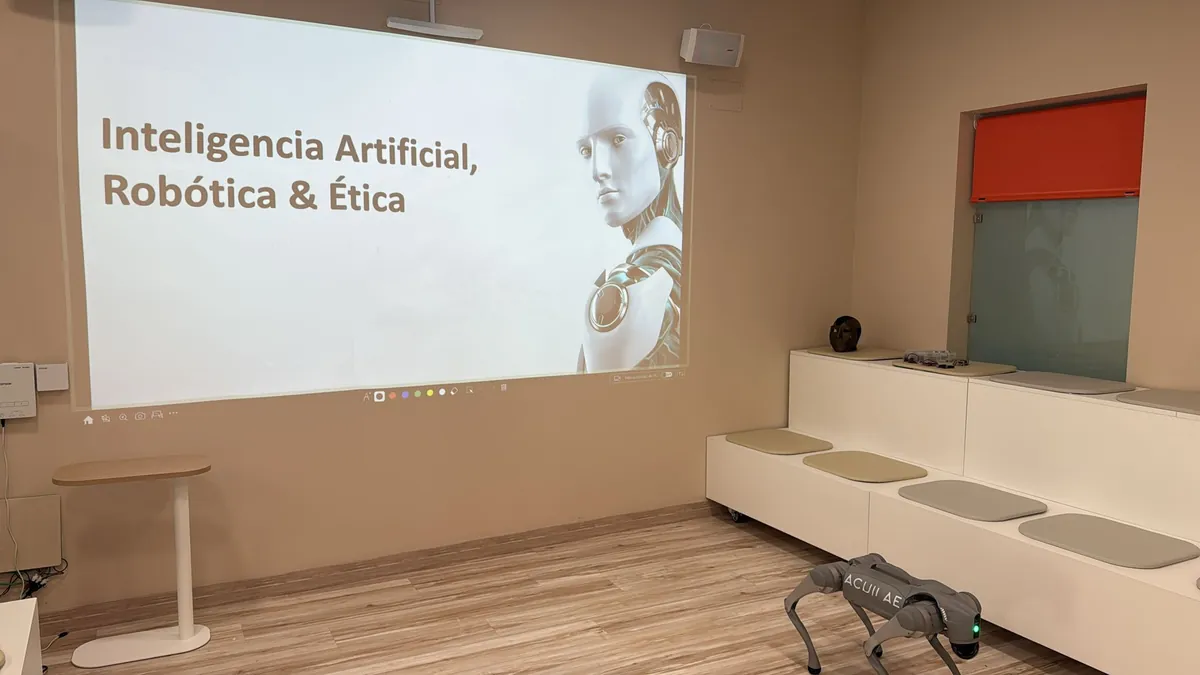
If the challenge calls for it, during prototyping teams can use virtual and augmented reality, connected devices or software development.
In a datathon the starting point is a data set. We select and prepare it before the event together with your company. It's a little shorter: two to three hours.
The schedule is the same, with two different phases:
Here the jury looks at impact, clarity and how well the proposal could influence a real decision.
 Activity designed by Aneta Magdalena and the Kleverplay team.

What makes it different
During prototyping, teams can use virtual and augmented reality, connected devices or software development, depending on what the challenge needs.
Optional and free
When it is over, we send you a PDF report if you would like one. It covers the activity and how it went, how the teams finished and who won, the conclusions and the photos of the day.
No. Teams work with diagrams, mock-ups and scripts, and the challenge can come from any area of the company.
Up to four hours, so it fits into a convention morning or afternoon.
From 10 to 500, split into teams that mix departments.
Your company, with our help to narrow it down. We have it finalised before the event.
They are handed over to the company, written up. We recommend deciding in advance who will follow them up.
We work with synthetic data. We generate and prepare it ourselves so the challenge is realistic without exposing any company information.
One table per team with power sockets, a stable internet connection and a screen for the final presentations.
 Indoors
Tech team buildingTech LabVirtual reality, augmented reality and robots within a single story.Up to 2 hours · 8 to 800 peopleSee the activity
 Indoors or outdoors
Team building with LegoBrick ChallengeBuilding challenges in teams: the tallest tower, a chain reaction and your company motto.Up to 2 hours · 10 to 400 peopleSee the activity
 Indoors
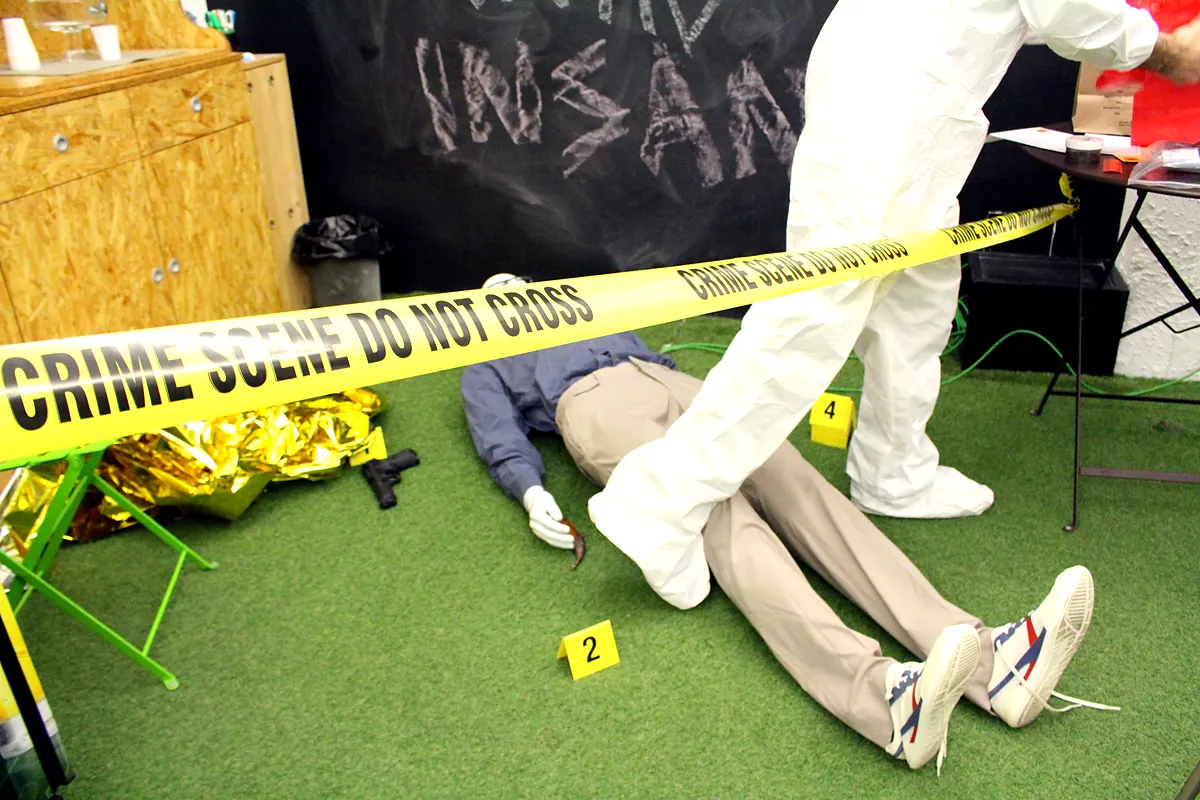
Cluedo for companiesEl Golpe MaestroA robbery, a mole among the investigators and an evidence box for each team.60 to 120 minutes · 10 to 150 peopleSee the activity
With the number of people, the date and the city, we can already suggest something concrete.
Still not sure what to ask for? Try the activity finder: four questions and three ideas.
Phone(+34) 678 60 83 94 · (+34) 91 892 83 26
Emailinfo@kleverplay.com
OfficeCalle de la Princesa de Éboli, 45, 4 C · 28050 Madrid