What makes it different
The innovation
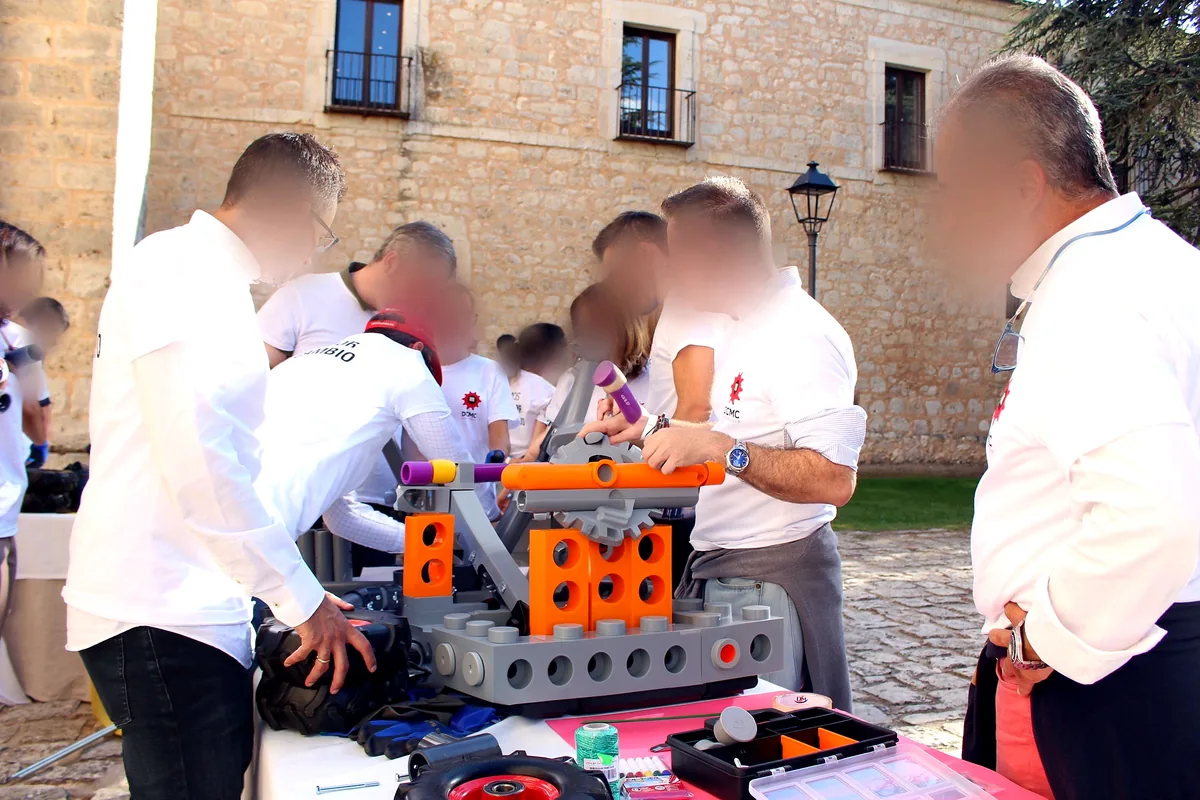
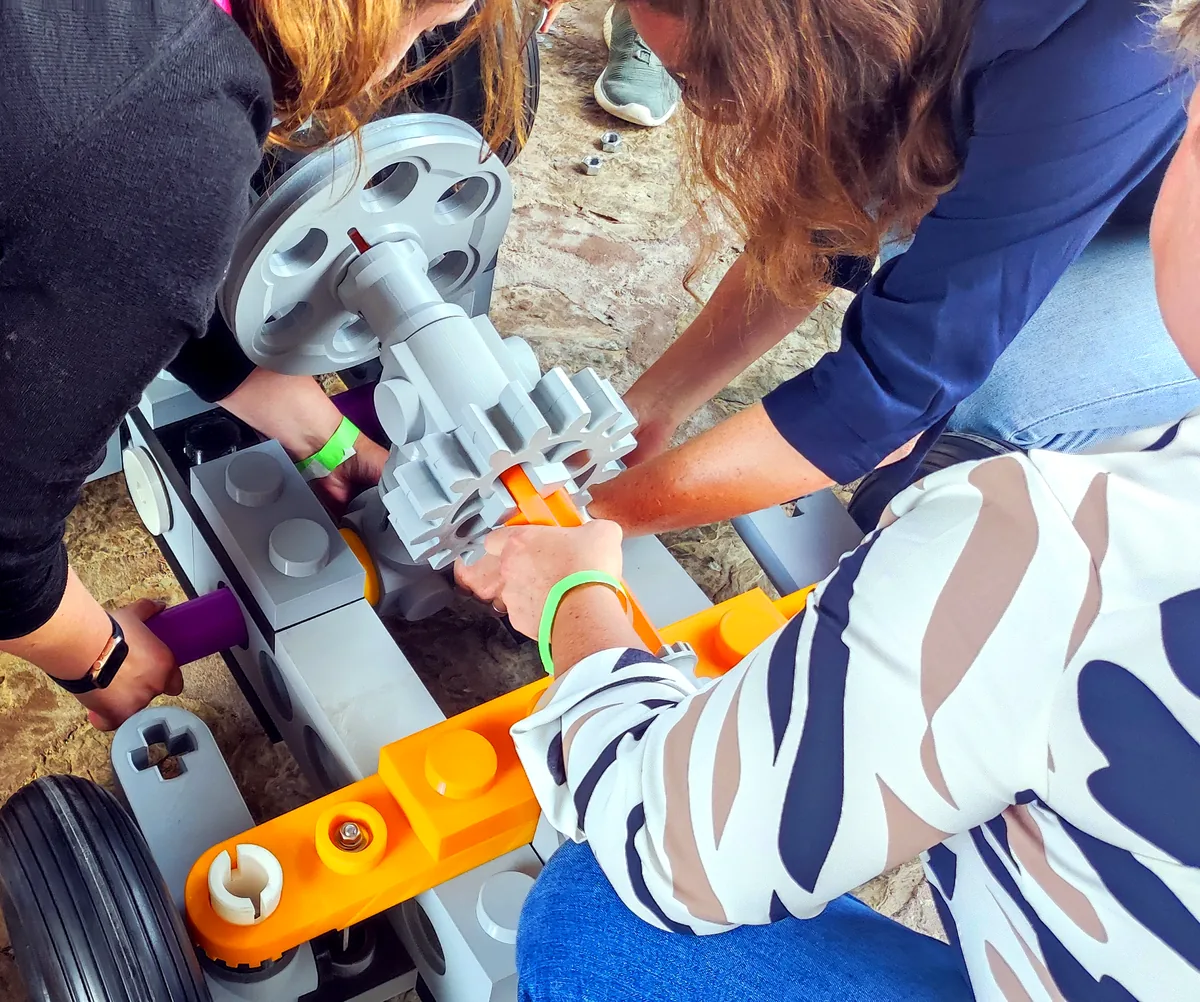
The cars are built with giant pieces and, once assembled, carry a person. One of the challenges to win pieces is defusing a bomb in virtual reality.

Brick Car Racing is our team building racing activity: each team builds its own car and then races it. The format has been part of corporate events for years. Ours has one difference: the cars are made of Lego, with giant pieces, and once built they really work and carry a person. There is nothing else like it in the sector.
The team goes from a pile of pieces to a car that rolls, and proves it in front of everyone else.
In a nutshell
Win the pieces. Teams start with no material. They earn it by passing short challenges, and each challenge passed gives them wheels, axles or parts of the chassis.
Build. With the pieces in hand, the car is built from the chassis up. It has to hold, because it will carry a person.
Customise. Each team names its car and decorates it their own way.
Test. Before the start there is time to roll a few metres and fix anything loose.
Race. All cars to the starting line.
They are challenges of a few minutes, testing skill and coordination. We choose which ones are played according to the group and the space.
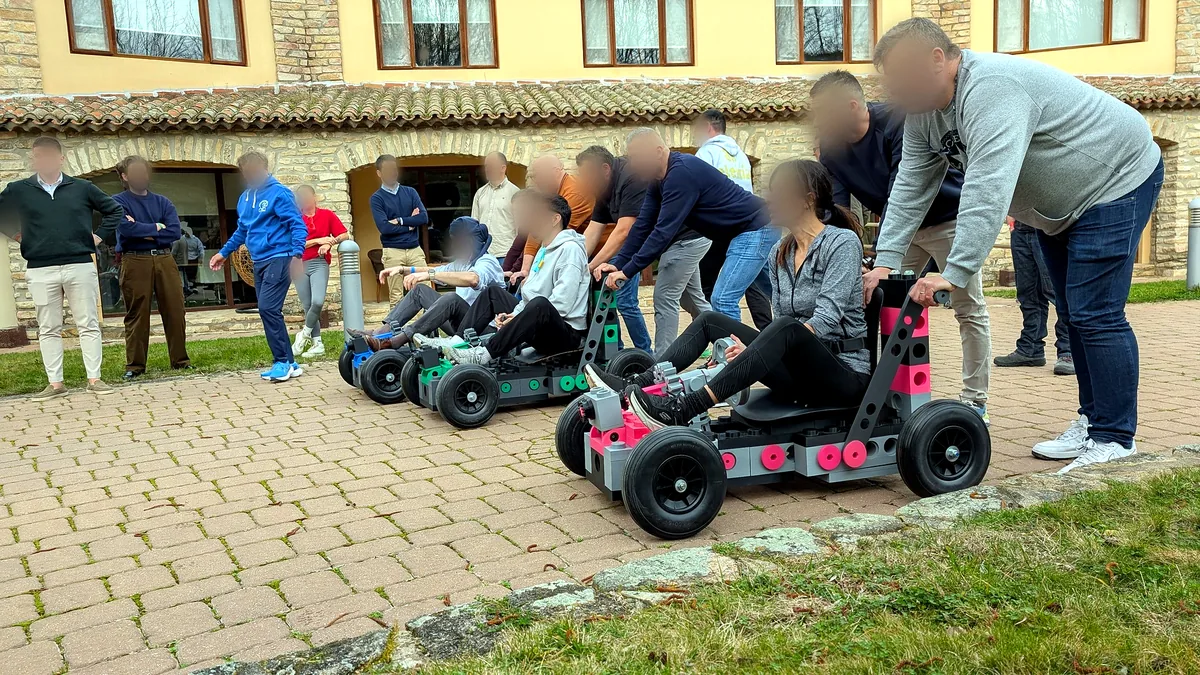
The race is an endurance test: an 8 to 10 metre straight that shows whether the car holds up. One team member sits at the wheel, wearing a helmet, and the rest push.
If there is no room to race, the race becomes a technical inspection: each car is checked, piece by piece, for sturdiness, assembly and finish, and the one that passes best wins.
It is the moment when the whole group is watching the same thing. The best-built, sturdiest car wins, and it is nearly always the one from the team that shared out the work best.
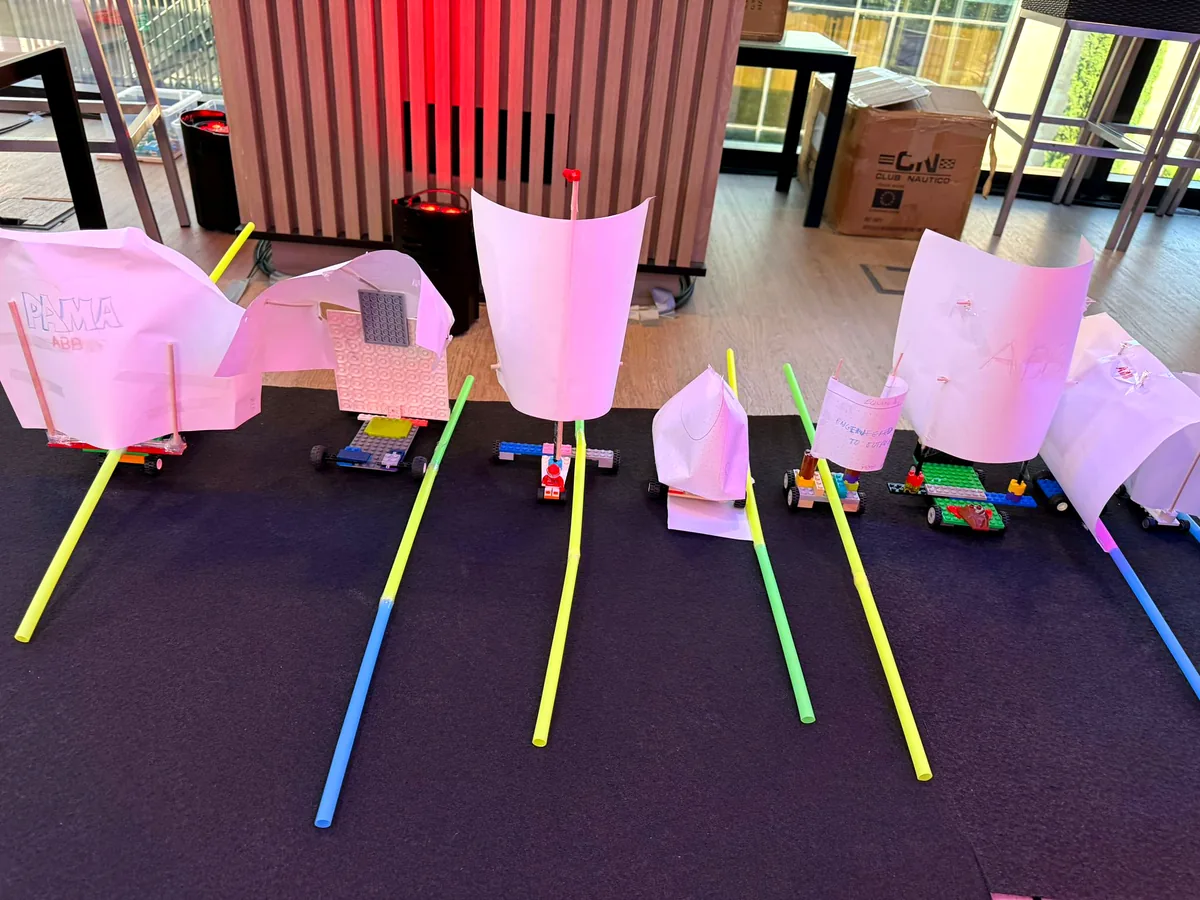
When there is no room to race, the car build is done on a small scale, with normal-sized Lego pieces.
It fits in an office meeting room or a hotel function room.
For the big cars, a smooth surface with an 8 to 10 metre straight for the race: a courtyard, the garden of a country estate with a paved area, a car park or a warehouse. It can be indoors or outdoors. Without that straight, the cars are built all the same and the race is replaced by the technical inspection.
For the tabletop version, one table per team and a clear aisle for the race.
In both cases it helps to have a separate building area, so the cars reach the start already finished.

It works with teams who do not know each other, because the car does not get finished unless they talk. And it gives you something no meeting-room exercise can: a test in front of everyone.
It fits a day at a country estate, as the morning activity, and a convention with outdoor space, to get the group out of the room. The photos of the starting grid are usually the ones that get shared most afterwards.
We have built Lego racing cars for, among others, an insurance company in 2025.
LEGO® is a registered trademark of the LEGO Group, which does not sponsor, authorise or endorse this activity or this site.
 Page written by Aneta Magdalena and the Kleverplay team.
What makes it different
The cars are built with giant pieces and, once assembled, carry a person. One of the challenges to win pieces is defusing a bomb in virtual reality.
Optional and free
When it is over, we send you a PDF report if you would like one. It covers the activity and how it went, how the teams finished and who won, the conclusions and the photos of the day.
No. It is designed for people with no experience and is built by several people together.
One person from each team, wearing a helmet. The rest of the team pushes.
Yes, if there is a warehouse or a large room with a smooth floor. For small rooms there is the tabletop version, with small cars pushed along by blowing.
By passing short team challenges before building: balance, channels, rings, brain teasers or a bomb to defuse in virtual reality.
From 10 to 60 people, split into teams.
Two hours, including building the cars and the final race.
If the race was planned outdoors, it is wise to have a covered area booked or to switch to the tabletop version.
An 8 to 10 metre straight that tests how sturdy the cars are. One person drives, wearing a helmet, and the rest of the team pushes.
It is replaced by a technical inspection: we check each car for sturdiness, assembly and finish, and the one that passes best wins.
With the number of people, the date and the city, we can already suggest something concrete.
Still not sure what to ask for? Try the activity finder: four questions and three ideas.
Phone(+34) 678 60 83 94 · (+34) 91 892 83 26
Emailinfo@kleverplay.com
OfficeCalle de la Princesa de Éboli, 45, 4 C · 28050 Madrid