What makes it different
The innovation
The teams build a robot that moves and talks, with a voice assistant they give a personality to. They also steer a quadruped robot that recognises gestures and can be programmed for a moment of the event.
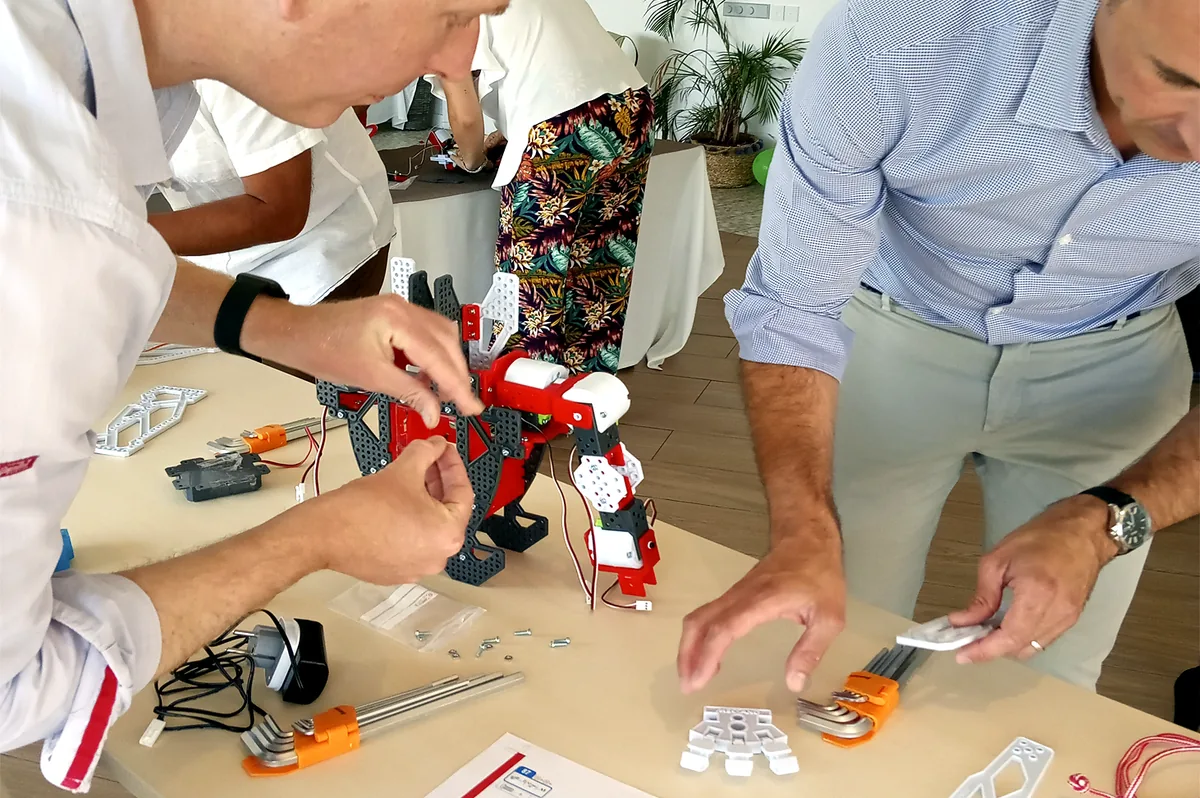
In team building with robots the group builds one robot together, gets it running and then competes with smaller ones. You do not need to know about technology or programming: what counts is sharing out the work and understanding each other.
It can be done with robots only, or you can add a drone workshop, course included.
In a nutshell
This is the core of it. We split the group into teams and each one gets a mission: an arm, the legs, the torso or the head.
Building in parts. Each team builds its own with pieces, motors and servos, following its plans.
Assembly. When all the parts are ready, they are joined. If one does not fit, the robot does not work, so the teams have to talk to each other well before the end.
Start-up. The robot is switched on, moves and talks, with a voice assistant the teams give a personality to.
If you like, the robot can stay at your office afterwards.

For extra fun, the pieces can be won first in short challenges, and the robot's accessories are made with 3D pens, which draw in three dimensions.
The robot dog. In pairs or small groups, people build a dog-shaped robot. When they are all finished comes the race, which decides which team built the fastest and most agile one.
The soccerbots. They are football robots driven by remote control. First you practise the controls by dodging obstacles, then teams play matches against each other.
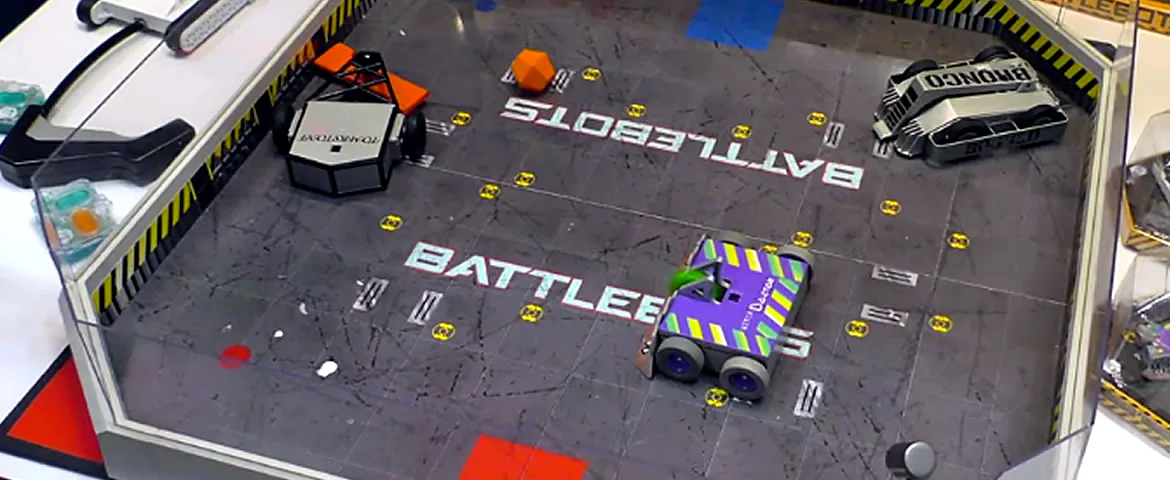
The robot battle. Remote-controlled combat robots face off inside a closed arena, with the teams all around.
Here you do not build: you steer.
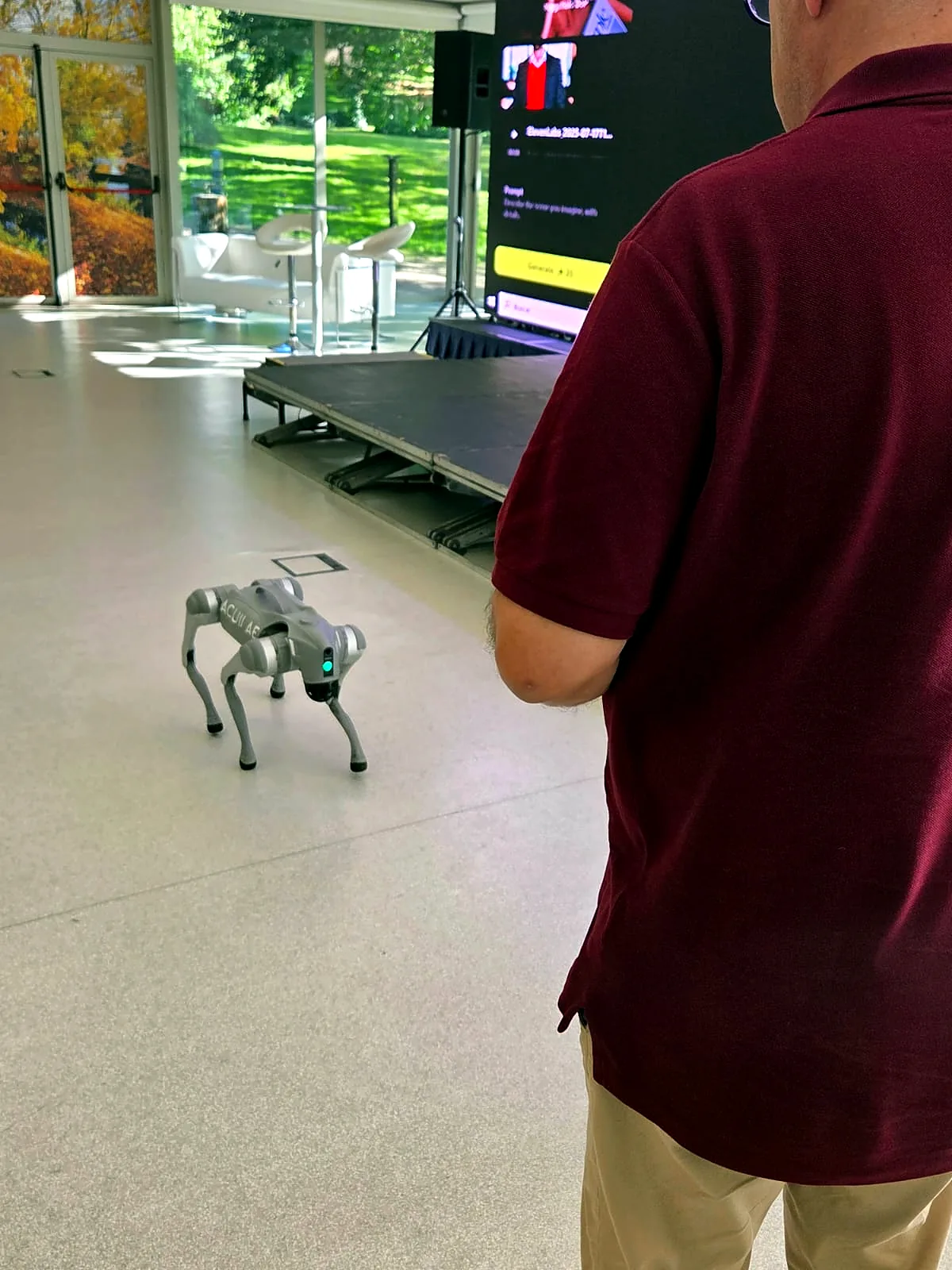
The MIP are small robots that balance on two wheels. The quadruped, a Unitree Go 2, walks on four legs, recognises gestures, waves and does acrobatics. Both are steered round a skills course, and the team that completes it best wins.
The quadruped is programmable, so it can also be given moves for a specific moment of the event, such as welcoming the guests.
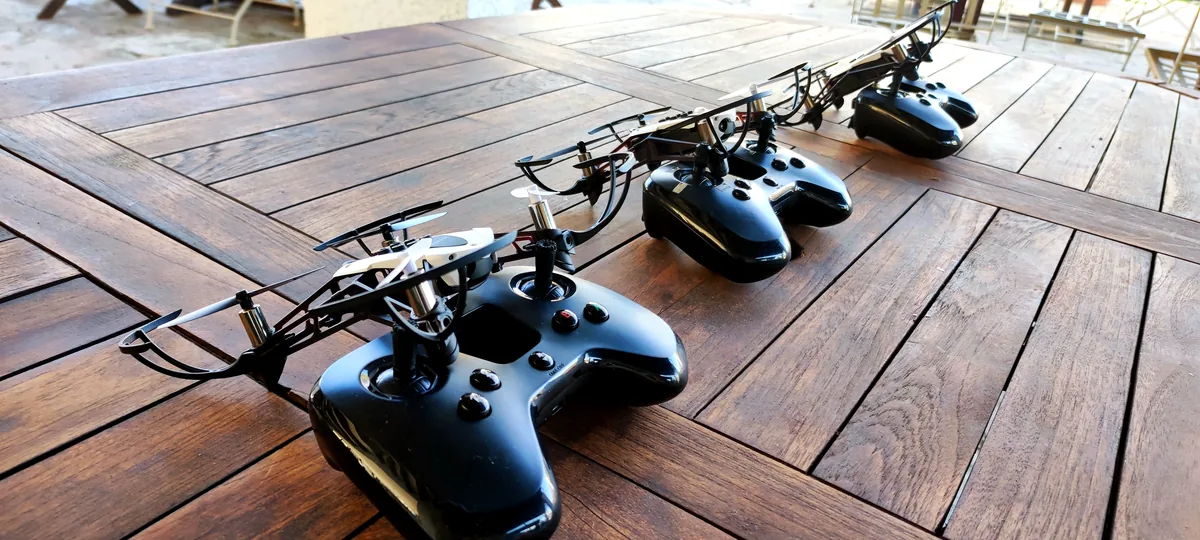
The drone workshop is added when there is space. The teams rotate through the stations.
First flight. Each person learns the basics and tries flying a drone.
Course. With a bit more practice, it is time to complete a course with hoops and do some stunts.
Assembly. Each team builds a drone to understand how it works inside. These ones are not flown.
Final competition. All the teams, on a harder course.
At the end, each participant receives a workshop certificate.
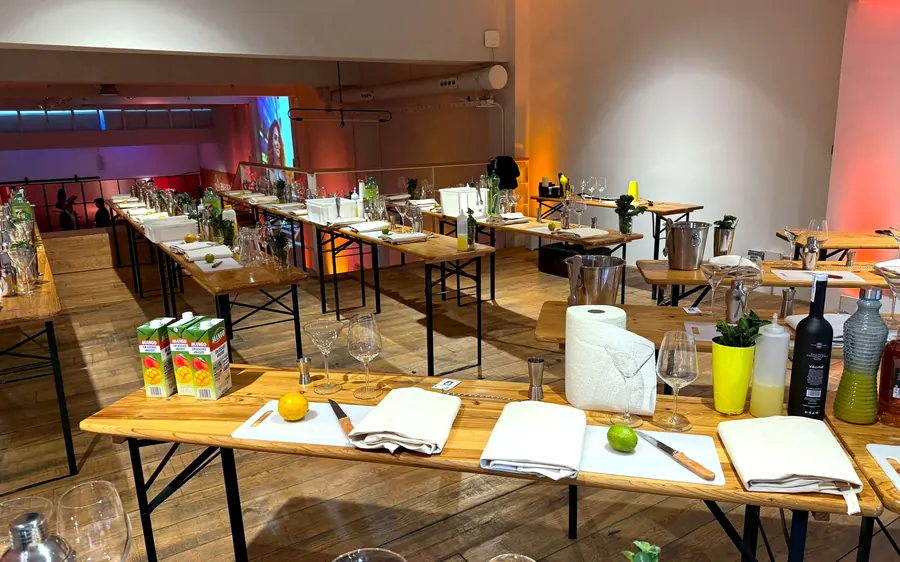
The robots are built in a room with one table per team: an office or a hotel function room. The course needs a smooth, clear floor.
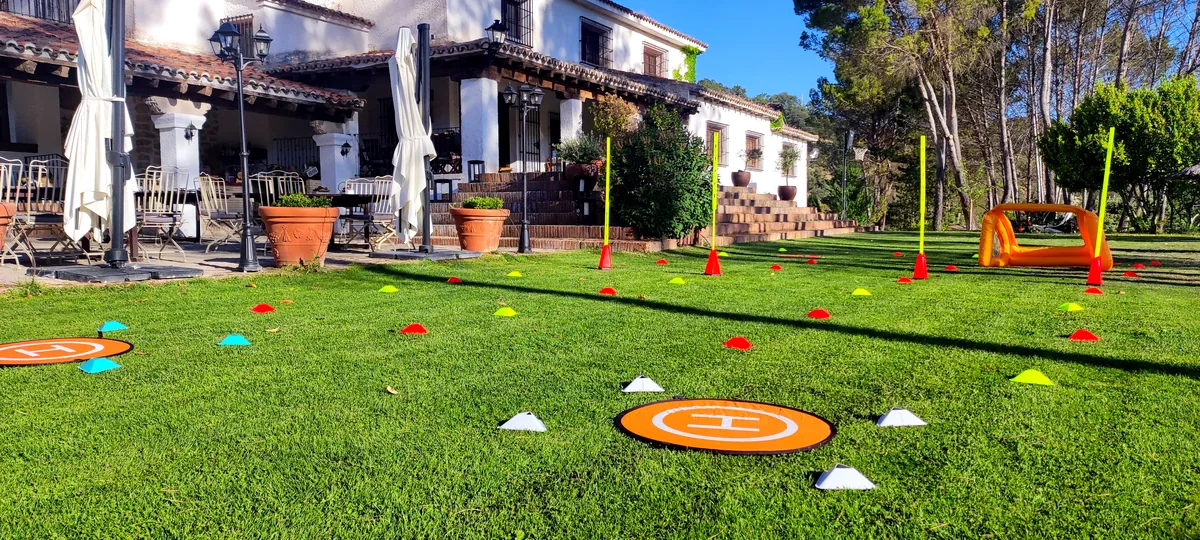
The drones need more room and a high ceiling. The easiest option is a garden or the lawn of a country estate.
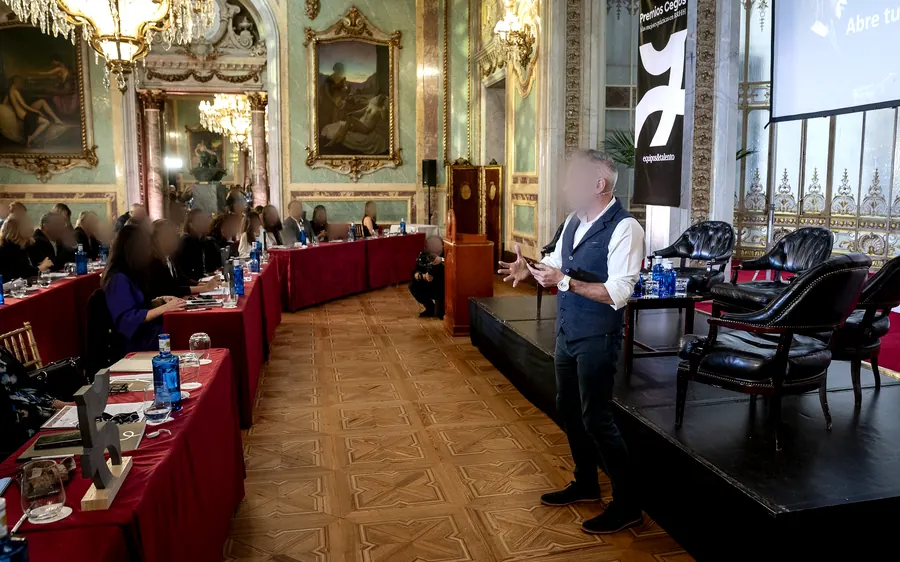
At a convention, to close a day of talks on innovation. The finished robot goes up on stage.
On a day at a country estate, with the robots indoors and the drones outdoors.
With technical and non-technical teams mixed together. Nobody starts with an advantage, because the instructions are designed for people with no experience.
For a good cause. The robot you build can be donated. We explain how on the corporate volunteering page.
If what you are after is virtual and augmented reality, take a look at Tech Lab.
 Page written by Aneta Magdalena and the Kleverplay team.
What makes it different
The teams build a robot that moves and talks, with a voice assistant they give a personality to. They also steer a quadruped robot that recognises gestures and can be programmed for a moment of the event.
Optional and free
When it is over, we send you a PDF report if you would like one. It covers the activity and how it went, how the teams finished and who won, the conclusions and the photos of the day.
No. The instructions are designed for people with no experience and the build is done by several people together.
Between an hour and a half and two and a half hours. We fit the time your company has.
Yes, it is optional. If you like, the robot you build stays at your office.
No. The drones the teams build are for understanding how they work inside. The ones that are flown are ours.
The robot part, yes: all it takes is a room with one table per team and a clear floor for the course. The drones work better outdoors.
From 10 to 500 people. With large groups, more than one robot is built, one for every 50 or 60 people, and the teams rotate through the other stations.
With the number of people, the date and the city, we can already suggest something concrete.
Still not sure what to ask for? Try the activity finder: four questions and three ideas.
Phone(+34) 678 60 83 94 · (+34) 91 892 83 26
Emailinfo@kleverplay.com
OfficeCalle de la Princesa de Éboli, 45, 4 C · 28050 Madrid