Medieval team building is a day, indoors or outdoors, in which teams compete as knightly houses in challenges from another age: archery, spears, padded pole fighting, peasant games and a catapult that has to be built. Ours is called “Back to the Past”.
It all has a story behind it: a document by Leonardo da Vinci is missing and you have to travel to the 15th century to find it. It lasts 2 to 3 hours, is for groups of 10 to 300 people and can be set up in any space. We only work with companies.
In a nutshell
2 to 3 hours, 10 to 300 people, in any space.
The teams are houses, each with its own shield, and every challenge scores points.
Eight challenges: the moat, medieval games, padded poles, spears, catapults, archery, wits and a djembe dance.
Each challenge has a practice session before scoring starts.
At the end, certificates for the best knights and heroines, and the victory banner for the winning house.
What a medieval team building looks like
The journey. The mission is explained: a time machine has been built using Leonardo da Vinci’s documents, but one is missing. You have to go back to his time to find it.
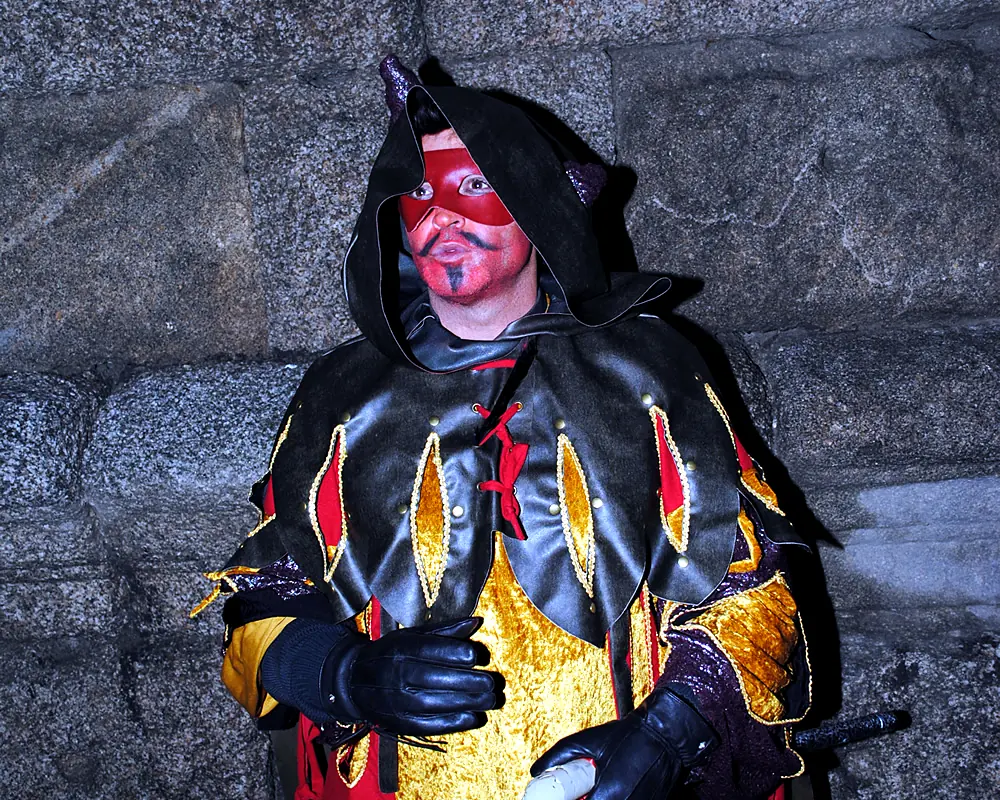
The houses. Each team receives a shield that it will have to defend throughout the day.
The challenges. Teams go through the skill and wits challenges. In all of them you practise first and score afterwards.
The return. The points are added up, the certificates are handed out and the winning house takes the banner.
Crossing the moatSwordsSpearsArcheryPeriod gamesSuccessive channels
The challenges of the medieval scavenger hunt
Challenge
What you do
Crossing the moat
Cross by stepping only on the right stones, and turn a tarp over without stepping off it
Medieval games
The stick game, the peasant and the potatoes, and the relay channels
Padded poles
Keep your balance on a log while your rival tries to knock you off
Spear throwing
Learn to throw and hit the targets
Catapults
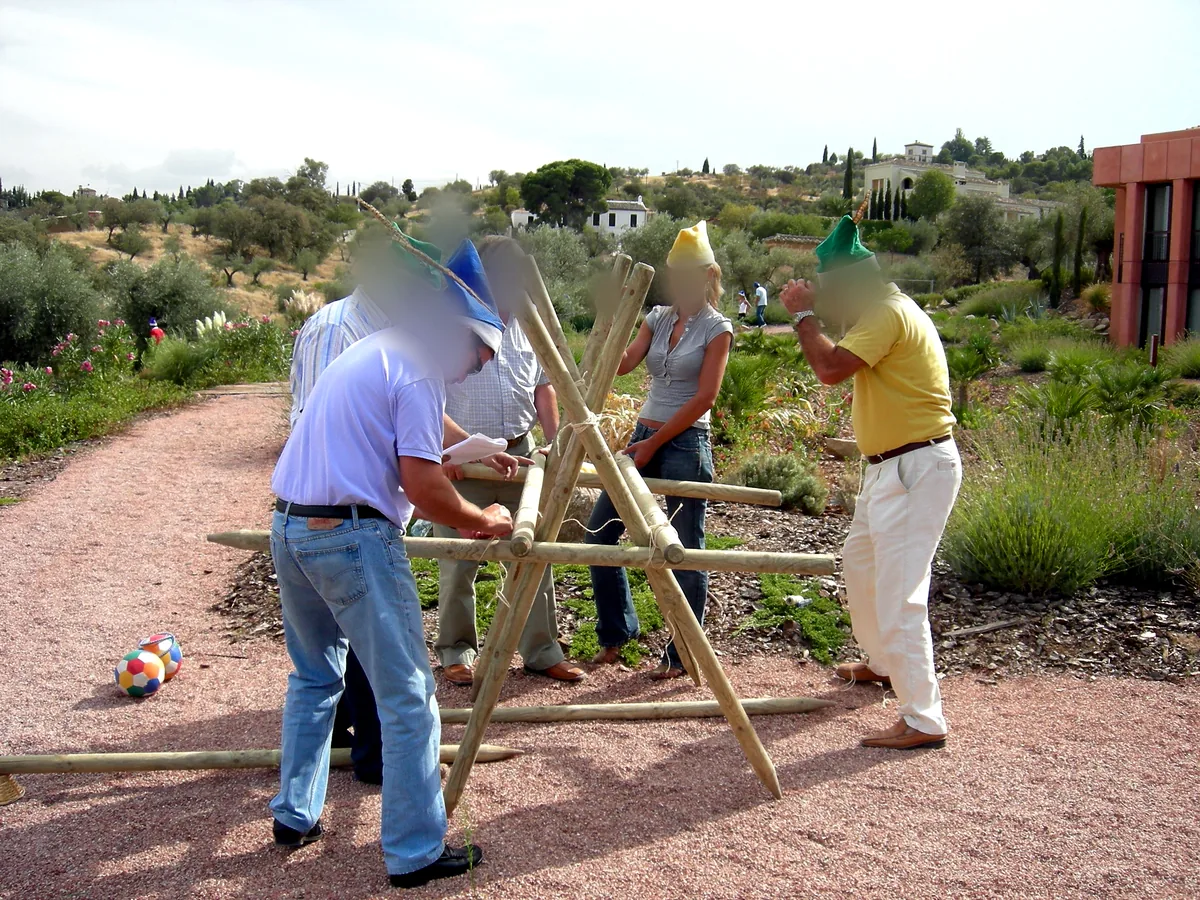
Build a catapult with wood and rope, and test it
Archery course
Archery at targets, animal figures and balloons
The lost document
Papyri, boxes that will not open and linked riddles
Djembe dance
Decode a Morse message beaten out on a drum and turn it into a dance routine
Crossing the moat
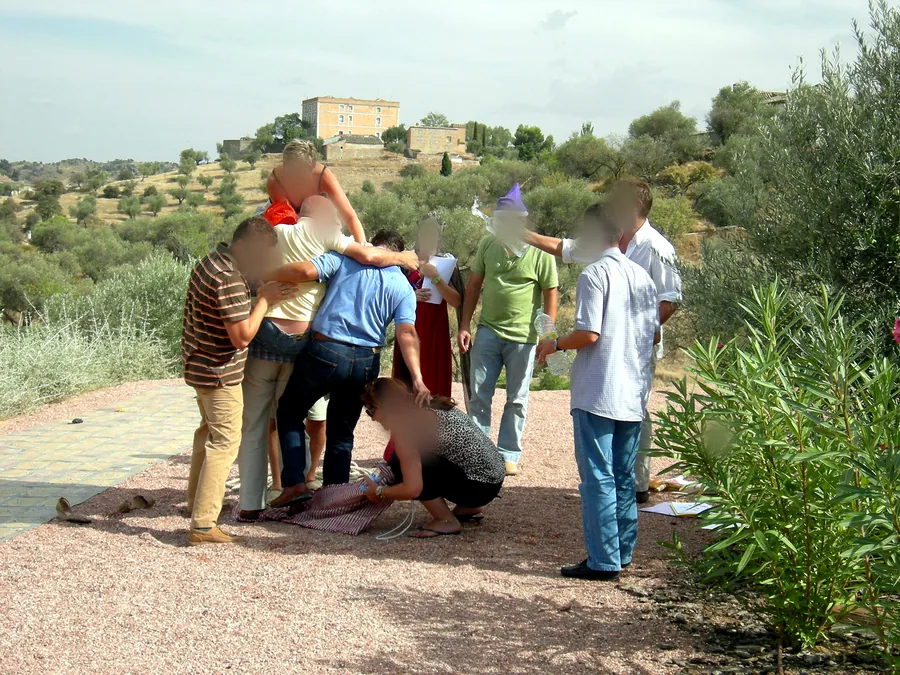
In “the shifting stones” you have to find the phrase hidden in the letters on the stones and step only on those. In “the blanket” the whole team stands on a tarp and has to turn it over without anyone putting a foot on the ground. These are trust challenges: nobody gets through them alone.
Medieval games
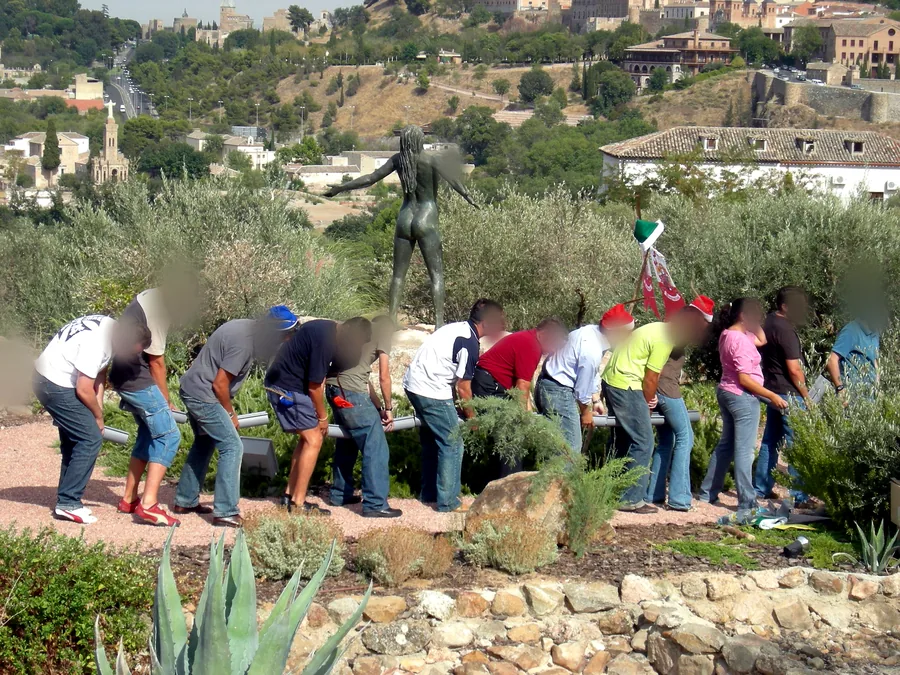
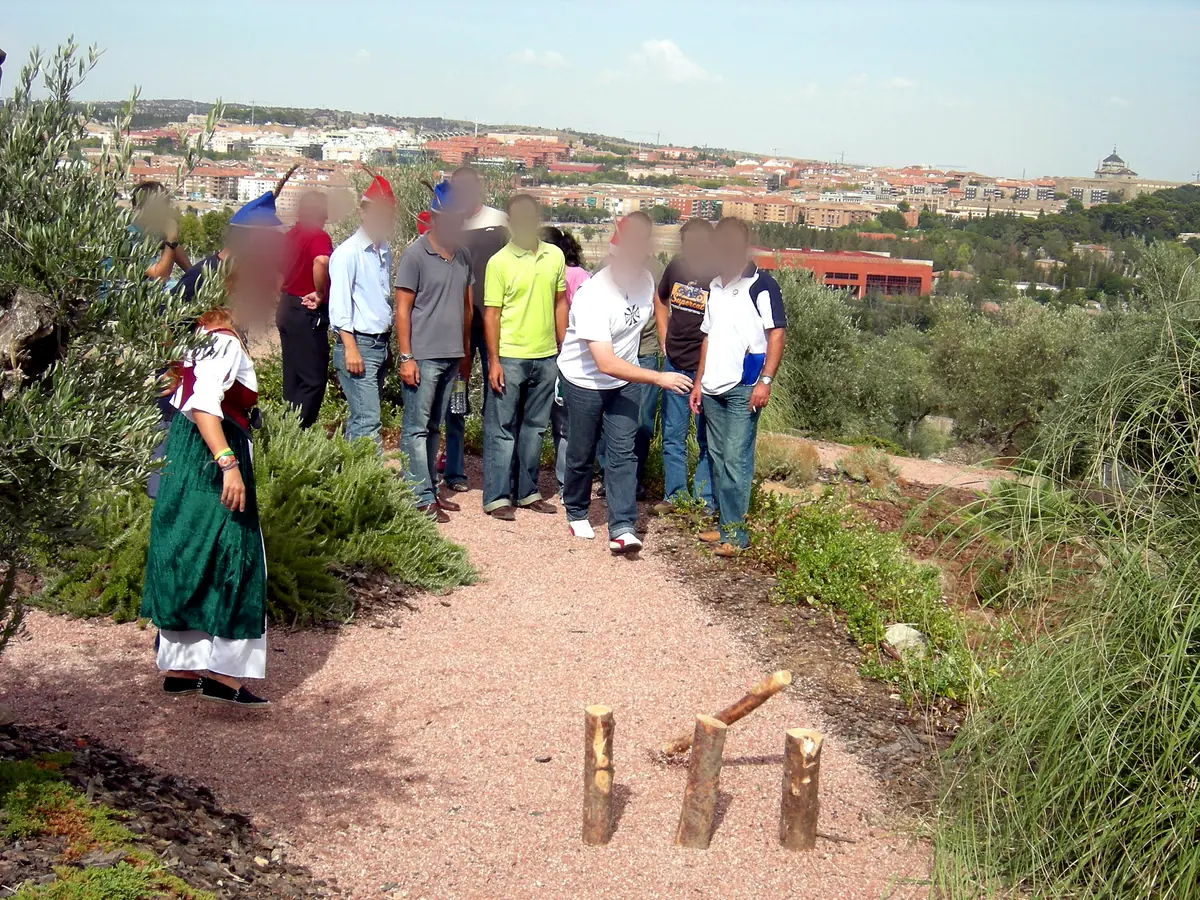
The peasant games. In the stick game you knock down a long stick by throwing smaller ones from eight or ten metres away. In “the peasant and the potatoes” you have to help a peasant who cannot count. In the relay channels, each person holds a section of channel and the ball has to travel along all of them without stopping or falling.
The stick game is explained by someone from the period.
Padded pole fighting
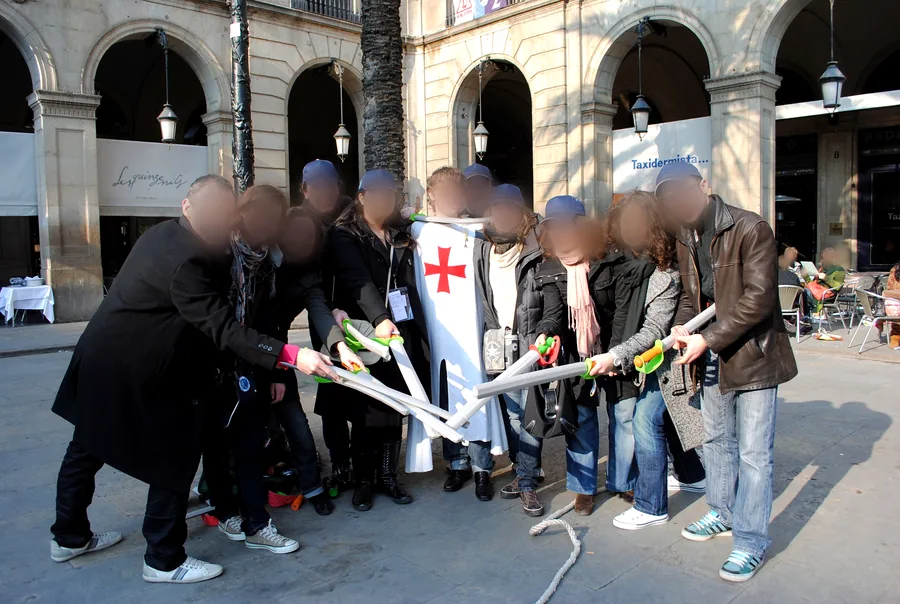
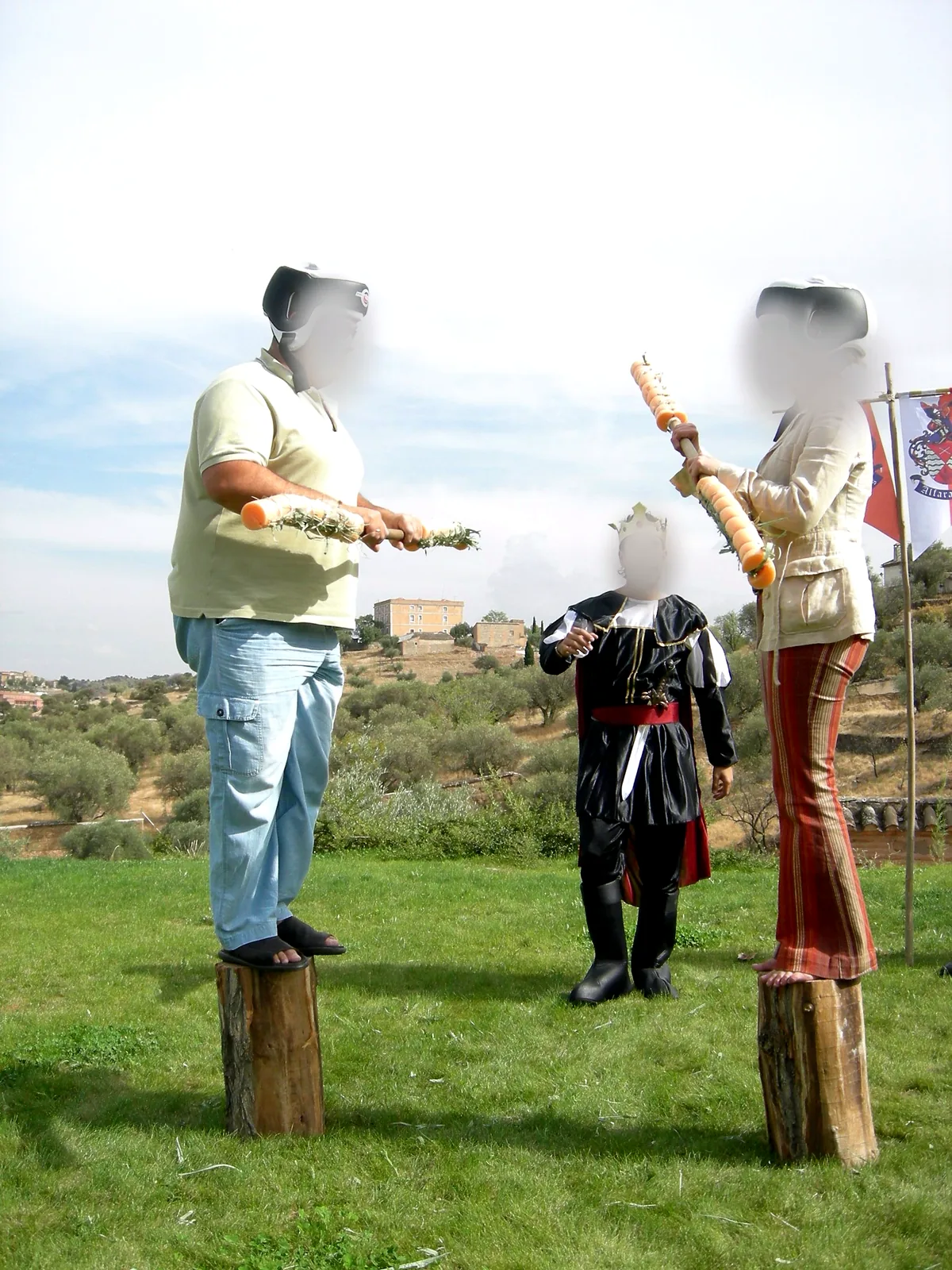
Two rivals, each standing on a log, and a padded pole each. Whoever keeps their balance wins. It looks easy until you get up there.
Each on their own log, and may the one who stays on win.
Spear throwing
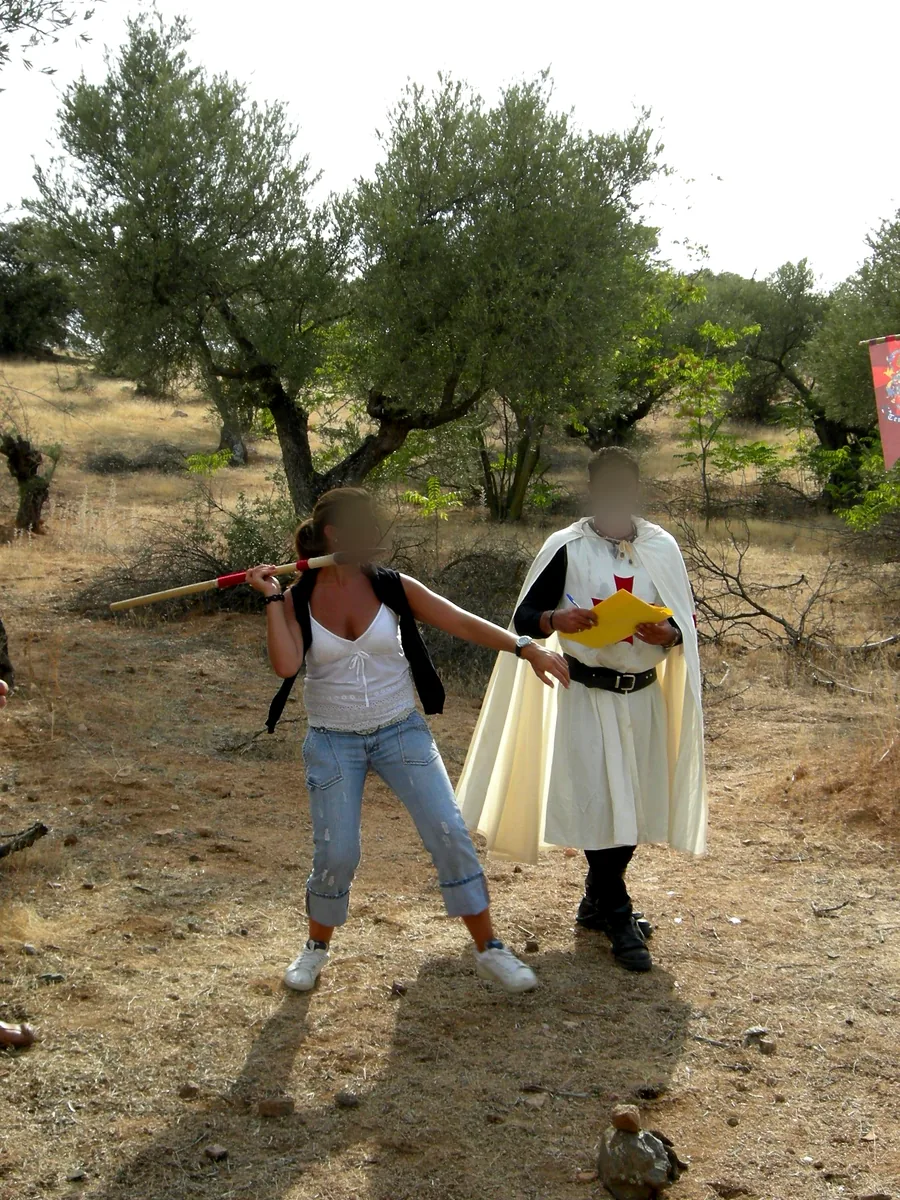
First you learn the technique and then come the challenges: throwing at targets and moving targets.
Building catapults
Each house receives wood, rope and instructions taken from Leonardo’s documents. It is built against the clock. Then it is tested by launching foam balls into baskets and at targets, and against the other houses.
Archery course
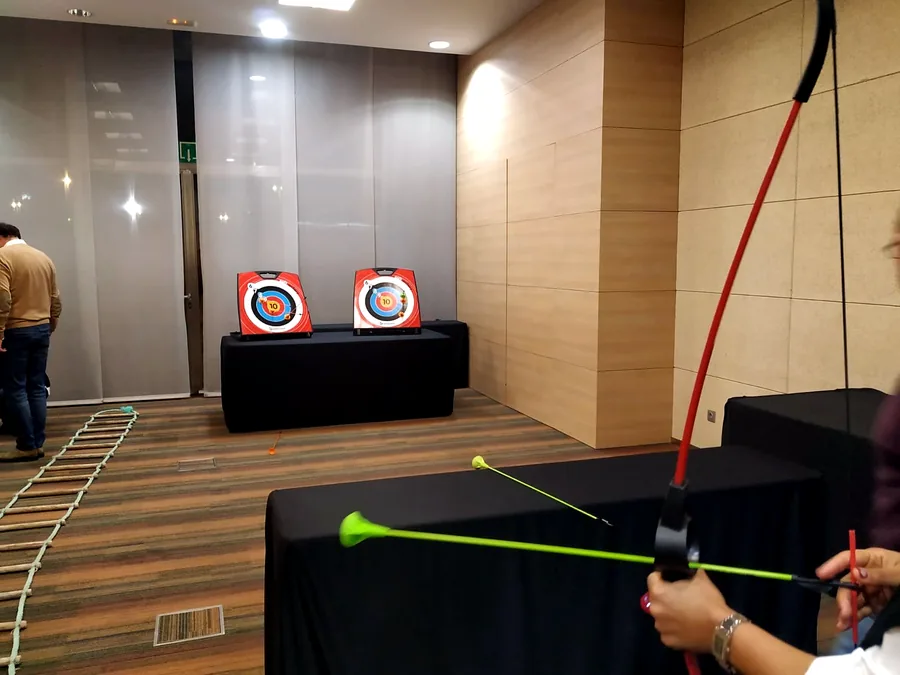
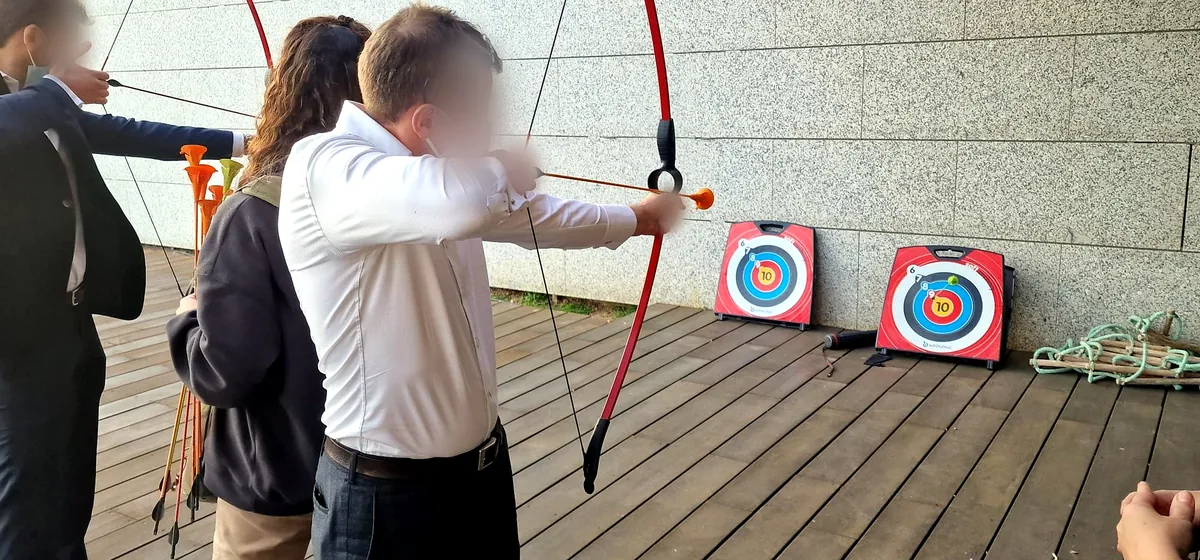
An introduction to archery so you can shoot safely from the very first minute, and a course with targets, animal figures and balloons. There is also archery trivia: depending on which square of the target you hit, you get a question.
Before scoring, everyone practises.
Da Vinci’s lost document
The brain-teaser part. Papyri, manuals and boxes that seem impossible to open. Each riddle solved leads to the next clue, until the document is found.
Medieval djembe dance
A facilitator plays a Morse message on the djembe. The team writes it down, decodes it with its alphabet and then repeats it with several drums and a dance routine.
When it is over, we send you a PDF report if you would like one. It covers the activity and how it went, how the teams finished and who won, the conclusions and the photos of the day.
The activity and how it went
The teams and the winners
The conclusions
The photos
Frequently asked questions about medieval team building
What is a medieval team building?
A day, indoors or outdoors, in which teams compete as houses in period challenges: archery, spears, padded poles, peasant games, catapults and riddles.
Do you need to be fit?
No. There are challenges of aim, balance and wits, and in all of them you practise before scoring. Everyone finds the one that suits them.
Are the challenges safe?
The poles are padded, the catapults launch foam balls and archery starts with an introduction.
How is the winner decided?
Every challenge scores points and they add up per house. The one with the most takes the victory banner.
Are there prizes?
Certificates for the best knights and heroines. A gift or trophy is optional.
How long does it last and how many people is it for?
It lasts 2 to 3 hours and is organised for groups of 10 to 300 people.
Where does it take place?
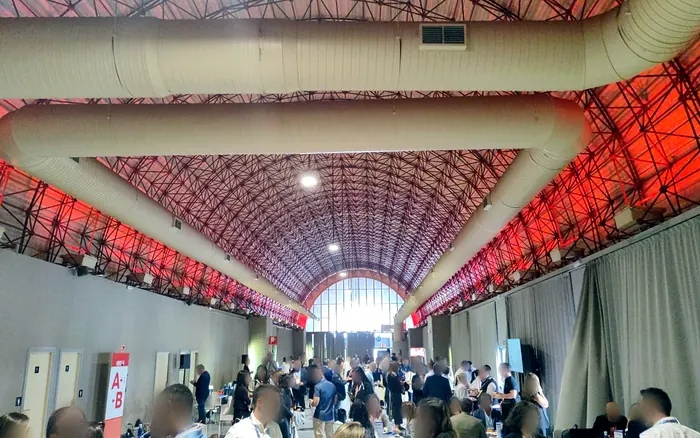
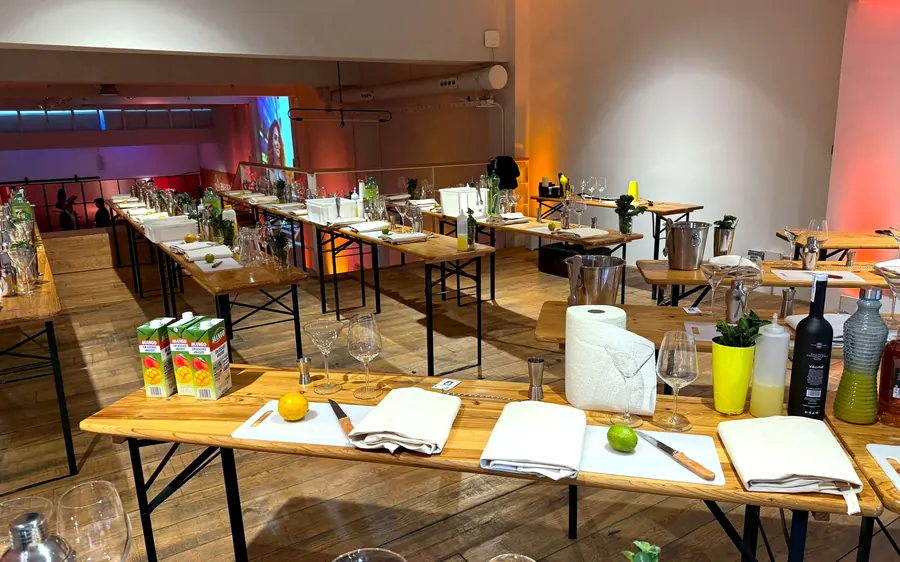
In any space, indoors or outdoors: a country estate, a garden or a hotel function room, or the place you already have for the event.
Do you organise it for private individuals?
No. We only work with companies and corporate events.